

Felt
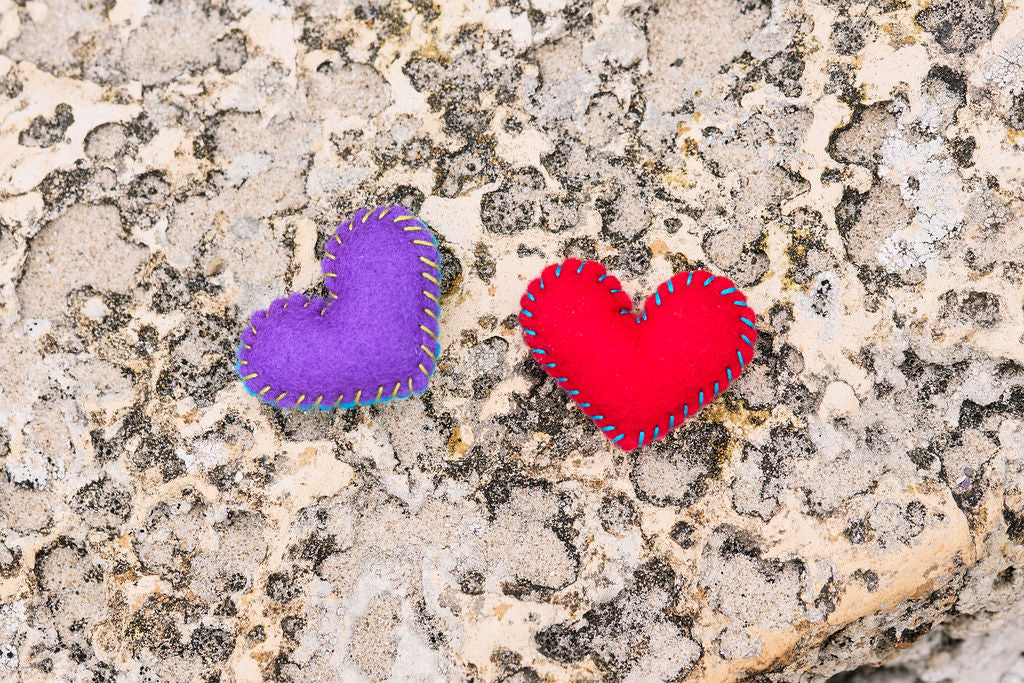
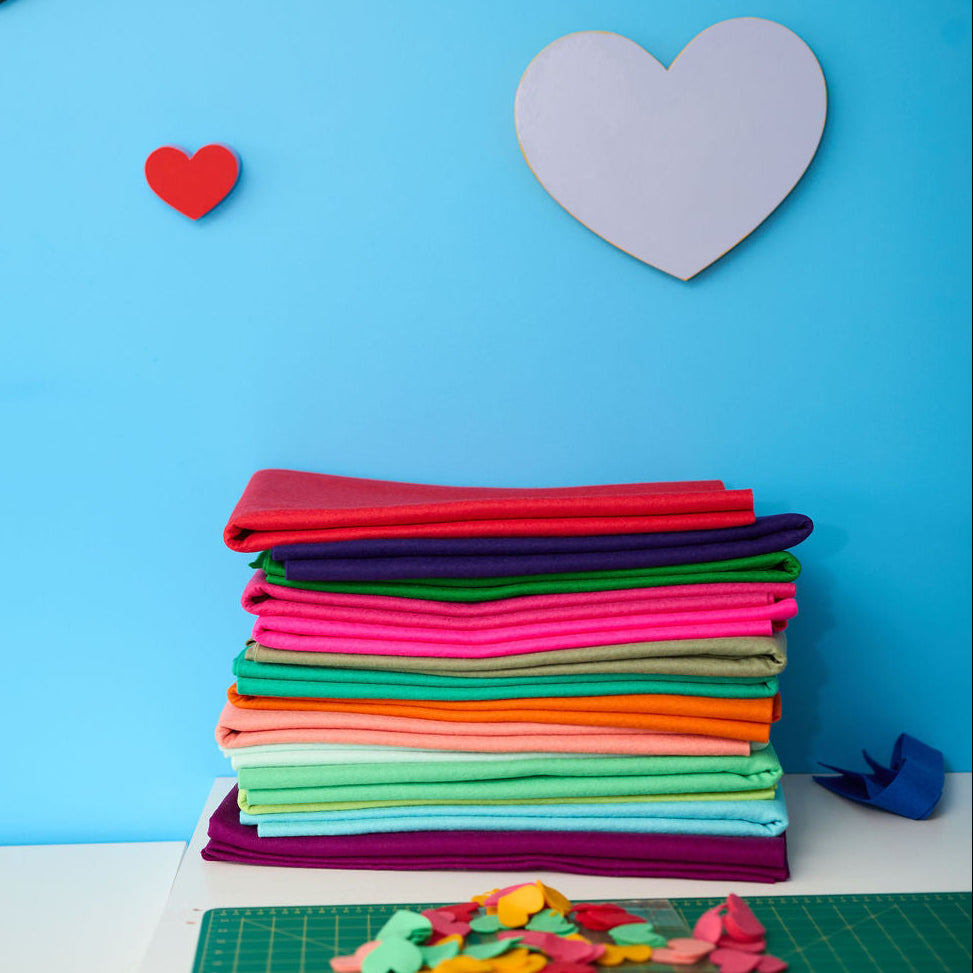
At 1000 Hearts, we use 100% pure wool felt. This is non-negotiable and I've done the research to back my commitment to this.
Wool felt is biodegradable and made from renewable resources, meaning it is eco-friendly. It is also safe, non-toxic and durable, making it the best choice for heart-making.
The biggest reason I hear for not using wool felt is the cost. While acrylic felt is cheaper, it is also derived from petroleum-based products, which are non-renewable and contribute to significant environmental impact. Acrylic felt also pills quickly, meaning these hearts become a disposable object rather than a cherished talisman.
You can purchase wool felt scraps in my shop as a cheap and practical option and if you are really struggling to cover the cost of your materials, please reach out via email, as I may be able to support you through our community program.
Stuffing
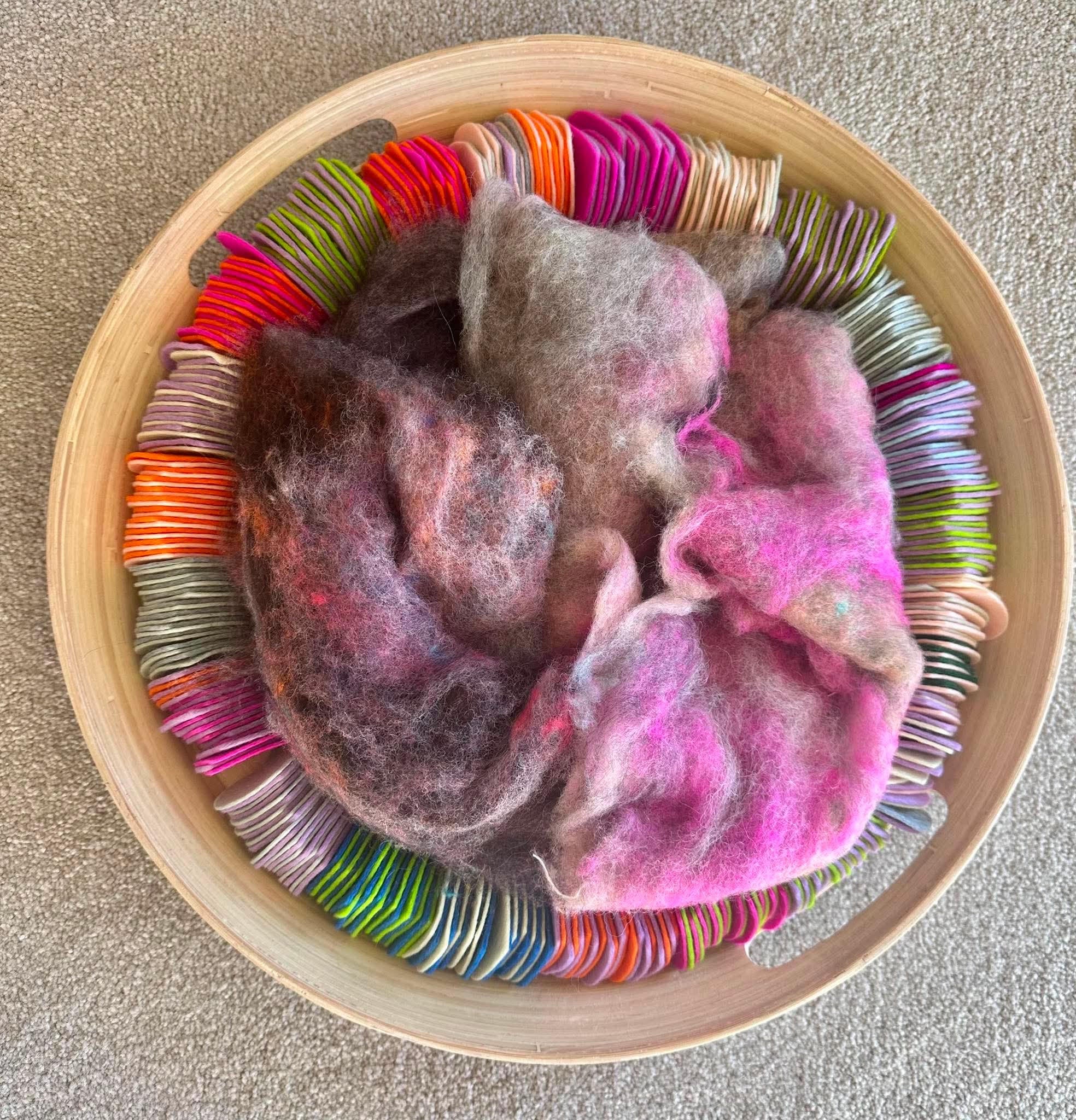
I use 100% pure wool stuffing, for the same reasons I use pure wool felt. It's renewable, eco-friendly and has the added bonus of supporting local businesses. I buy bulk lots of short-fibre wool stuffing from a sheep farmer in NSW for my kits and stuffing packs. In an exciting development, I also have a Tasmanian maker creating wool stuffing from pure wool fleece + my small felt scraps, creating a wonderful recycled, multi-colour and beautiful product. Wool stuffing is available in my shop.
Recycling and reusing materials for stuffing is another way to be eco-friendly. Some people use fill from unused cushions or toys to fill their hearts. If you're upcycling, please make sure your materials are clean and hygienic.
Scraps
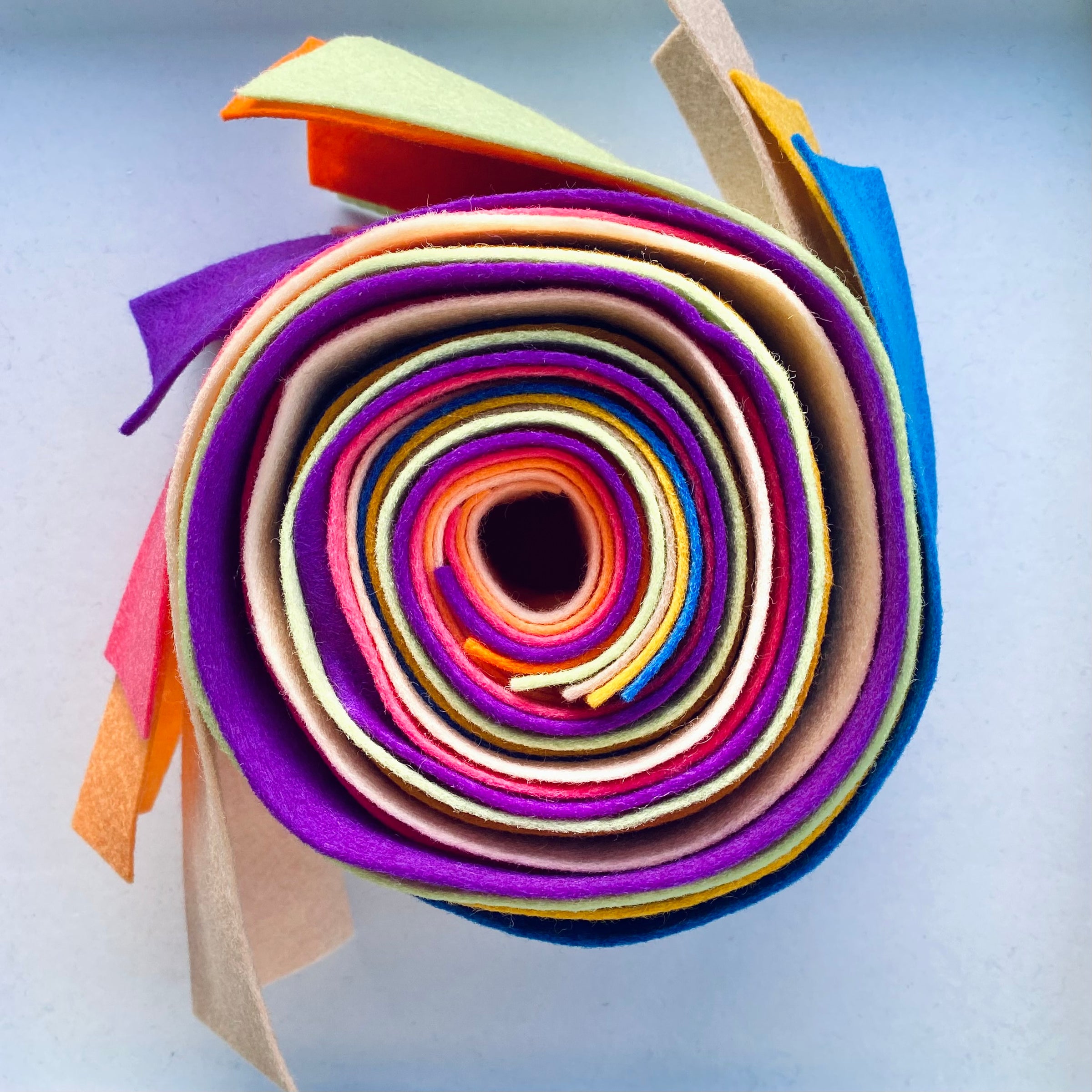
I purchase felt in large sheets, and am passionate about minimizing waste by using scraps in creative ways. Strips of felt leftover from the initial cut are used in kits, community hearts and sold in bundles as a super economical option to buy wool felt.
My second cut results in smaller scraps. I trim these to save wider pieces for my bags of offcuts, which are great for cutting hearts and embellishments. The smaller pieces are donated to schools or communtity groups for use in art projects, or mixed with wool fleece and turned into wool stuffing by the clever Tish, in north-west Tasmania.
If you are cutting your own hearts, make embellishments by hand-cutting or using a die or punch to cut shapes from smaller scraps. Chop smaller scraps and mix with stuffing to make it last longer, or find a local group who can make use of scraps.
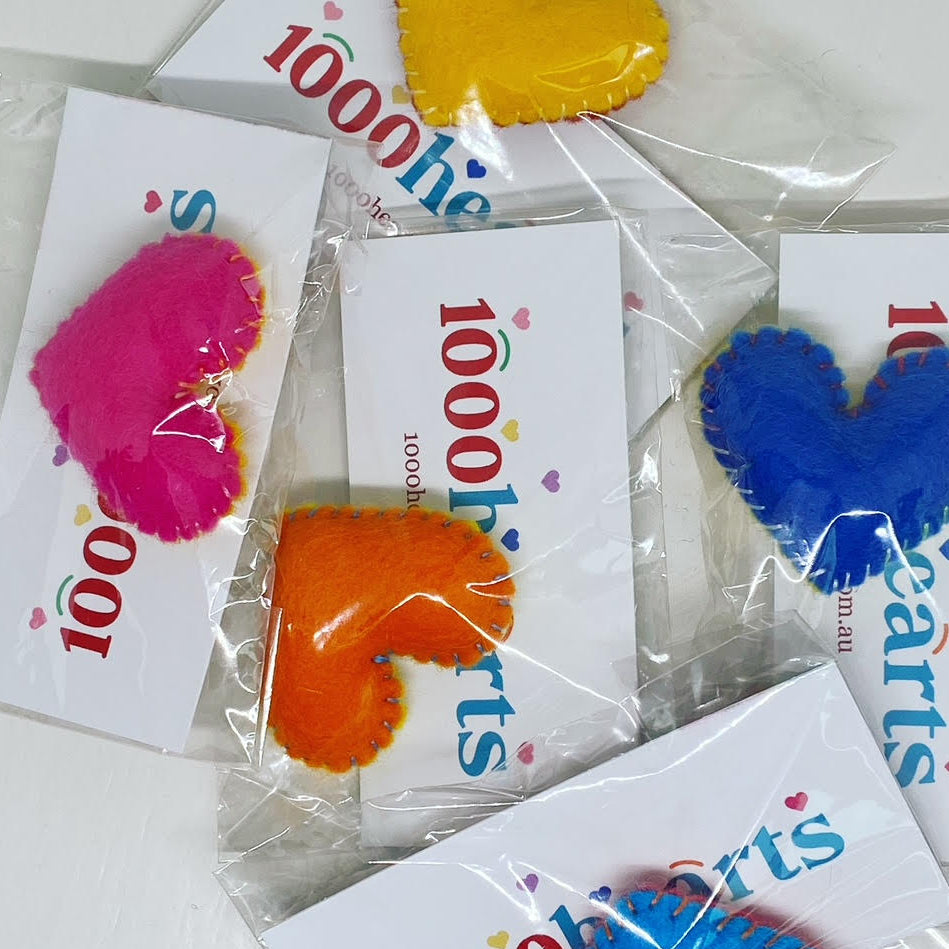
Wrapping
The bags I use for wrapping individual hearts and most of my products are made from biodegradable cellophane which can be composted. The only plastic bags I use are the self-sealing ones for kits; I am yet to find a good replacement for this size and purpose.
It is best to wrap individual hearts if you are gifting them in public places, as this protects them and keeps them clean and hygienic. This is important because so many hearts go to hospitals, palliaitive care wards and children. As we learned during the pandemic, vulnerable people need our protection and care.
Where appropriate, you can attach the 1000 Hearts card to hearts by tying it with thread, stitching it loosely to the heart or using a paperclip or safety pin. I love seeing creative ways of sharing our message in an eco-friendly way.